Deepseek
I am prevented from signing into my Deepseek account on both my cell phone and my laptop. I get the "wheel of death." The result is that I am only able to copy partial conversations.
Vatican's current view of Origen
The Vatican's current view of Origen is one of respectful nuance and careful distinction—honoring his monumental contributions as an early Christian intellectual and spiritual father, while clearly distancing Catholic doctrine from his speculative theological errors. There is no single "official" modern pronouncement, but the position can be synthesized from magisterial documents, papal statements, and the work of modern scholars in dialogue with the Church.
Key Aspects of the Modern Catholic View:
1. Recognition as a "Father of the Church" and a Genius:
Origen is consistently hailed as one of the greatest and most influential theologians of the early Church, a brilliant exegete, and a spiritual master.
Pope Benedict XVI dedicated two General Audience catecheses to Origen (April-May 2007), praising him as a "singular figure" and a "man of outstanding learning" whose work "marked an irreversible turn in Christian thought."
He is celebrated for his tireless work on biblical texts (the Hexapla), his homilies that popularized Scripture, and his pioneering theological synthesis.
2. Clear Rejection of His Doctrinal Errors:
The Church maintains the irreversible condemnations of the Second Council of Constantinople (553) regarding Origen's specific errors, especially:
The pre-existence of souls.
The related concept of transmigration (metensomatosis).
The "monstrous restoration" (apokatastasis) implying the inevitable salvation of all, including the devil.
These are seen as philosophical speculations incompatible with defined dogmas: creation ex nihilo, the uniqueness of the Incarnation, the reality of eternal hell, and the resurrection of the body.
3. Distinguishing the Theologian from His System:
The modern approach is not to anathematize Origen wholesale, but to "separate the gold from the dross" (to use a patristic metaphor).
His profound spiritual insights, biblical exegesis, and theological reflections on prayer, Christ (the Logos), and the soul's ascent to God are highly valued and studied.
His errors are understood as the overreach of a brilliant mind attempting to reconcile faith with Neoplatonic philosophy, a project that sometimes led him beyond the deposit of faith.
4. Origen's "Tragic" Status:
There is a palpable sense of tragedy in modern Catholic assessments. Origen is viewed as a devoted, ascetic, and courageous Christian (his self-castration and torture during persecution are noted) whose legacy was marred by his speculative excesses and the later exaggerations of his followers (the "Origenists").
He is a figure of paradox: a father of theology whose core system was rejected, a saintly man (venerated in some Eastern traditions) whose orthodoxy was condemned.
Practical Implications Today:
Academic Study: Catholic universities and pontifical institutes (like the Institutum Patristicum Augustinianum) study Origen extensively. Scholars engage critically with his work, separating his enduring spiritual insights from his condemned doctrines.
Spiritual Writings: His homilies, especially on the Song of Songs, Exodus, and the Gospels, are published in modern translations (e.g., in the Ancient Christian Writers series) and recommended for spiritual reading. His vision of Scripture having multiple senses (literal, moral, allegorical) profoundly influenced Catholic exegesis.
Magisterial Silence on Rehabilitation: There is no movement to overturn the 553 condemnations. The Catechism of the Catholic Church, while referencing many Church Fathers, does not cite Origen, a silent acknowledgment of his problematic status. His speculative errors remain firmly outside Catholic doctrine.
In Summary:
The Vatican's current view is best described as "critical reverence." Origen is seen as:
An indispensable historical figure whose work laid foundations for all later Christian theology.
A treasury of spiritual wisdom for meditation and prayer.
A theologian who erred gravely on specific points of doctrine, and those points remain condemned.
A cautionary tale about the limits of philosophical speculation when it contradicts revealed truth.
Thus, while one will not find Catholic doctrine drawing from Origen's system of pre-existence and transmigration, one will find him hailed as a seminal thinker whose love for God and Scripture continues to inspire, even as his specific errors serve as a boundary marker for orthodoxy.

Subscribe to:
Post Comments (Atom)
Fire from the Smokies
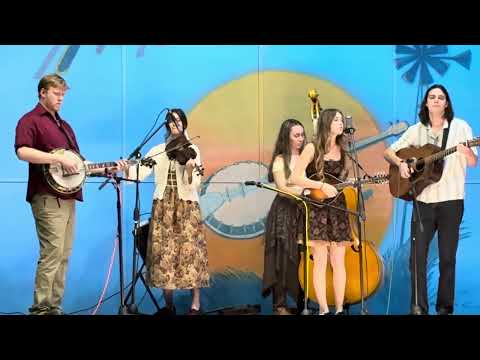
Burnett Sisters bring you authentic Appalachia Song of the Mountains If you like Bluegrass, Old-Timey, Trad and Roots m...
-
Deepseek I am prevented from signing into my Deepseek account on both my cell phone and my laptop. I get the "wheel of death." ...
-
 What is being done to curb the ballooning error cascades of agentic ai, and how effective are these methods (try to be quantitative as well...
 -
ds agentic ai use the next token probability method, in th main? Completed 2 steps Yes—at the core, agentic AI systems still typical...
No comments:
Post a Comment