Perplexity
What did bce Zoroastrians say about transmigration?
Pre‑Islamic (BCE) Zoroastrianism, as far as our evidence goes, did not teach transmigration or reincarnation of the individual soul in anything like the Indian or Pythagorean sense.
Earliest Zoroastrian texts
In the Gathas and the rest of the Avesta (our main sources for BCE Zoroastrian religion), the afterlife is described in terms of:
A judgment at death, in which one’s thoughts, words, and deeds are weighed.
The Chinvat Bridge, which becomes wide and pleasant for the righteous and razor‑thin for the wicked.
Two main destinations: the “House of Song” (for the righteous) and the “House of Lies” (for the wicked), sometimes understood as states as much as places.
There is no statement in these texts that the soul returns to another body on earth after death.
Later doctrinal developments (still non‑reincarnationist)
By late Achaemenid and then Sasanian times (still pre‑Islamic), Zoroastrian theologians elaborated:
An intermediate state (hamistagān) for those whose good and evil are balanced, but this is not a cycle of rebirth, rather a temporary condition before the final restoration.
A final renovation of the world (frashōkereti), when the dead are resurrected and the cosmos is purified; again, this is a once‑for‑all resurrection, not repeated transmigration.
These ideas assume a linear history and a single earthly life followed by judgment, not samsaric cycles.
Explicit rejection in traditional teaching
Modern scholarly and community expositions that rely on the older textual tradition explicitly say that reincarnation is foreign to Zoroastrian doctrine:
Zoroastrian FAQ literature states that “the concept of reincarnation is foreign to Zoroastrianism,” summarizing the classical position that each person lives once, is judged, and awaits the final renovation.
Explanatory essays on Zoroastrian belief similarly present heaven/hell (or House of Song/House of Lies) and resurrection, but not transmigration.
Where you do see “reincarnation‑like” ideas in some modern esoteric Zoroastrian currents (for example, some Ilm‑e‑Kshnoom circles), these are later reinterpretations and not demonstrable features of BCE Zoroastrianism.
So, what did BCE Zoroastrians “say” about transmigration?
Given our sources, the best reconstruction is:
They assume one earthly life per person, not repeated births.
They focused on ethical responsibility in that life, followed by post‑mortem judgment and an eventual universal restoration.
They neither develop nor endorse a doctrine of transmigration in the Indian or Platonic sense; when transmigration ideas later circulate across the broader Iranian–Hellenistic–Indian ecumene, they are not assimilated into mainstream Zoroastrian doctrine as we can trace it.
So, insofar as we can speak of a BCE Zoroastrian “view” on transmigration, it is best characterized as silence in the earliest sources and, by structure and implication, a rejection in favor of single‑life judgment and resurrection.
Curiously, for Indian religions, the house of lies is samsara.
That is a very natural comparison, but structurally they are almost inverted.
Structural contrast
In Indian traditions with saṃsāra, the cycle itself is the “problem”: repeated birth and death are intrinsically bound up with ignorance and suffering, so liberation is an exit from cyclical existence altogether.
In Zoroastrianism, the material world and embodied life are good creations of Ahura Mazda; the “problem” is choosing druj (lie, disorder) rather than asha (truth, order) within a single, linear history culminating in a final renovation.
So while the House of Lies is indeed the punitive state reached through ignorance, deceit, and destructive action—functionally analogous to the “bad outcome” of remaining in saṃsāra—it is a post‑judgment hell within a linear eschatology, not the ongoing cyclical condition itself.

Subscribe to:
Post Comments (Atom)
Fire from the Smokies
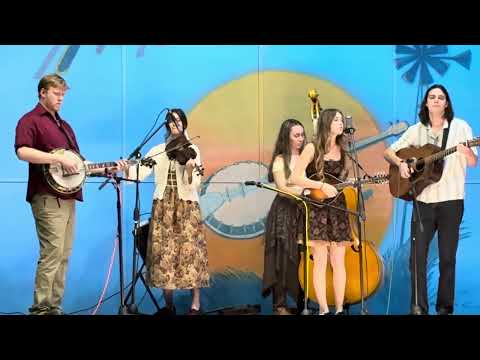
Burnett Sisters bring you authentic Appalachia Song of the Mountains If you like Bluegrass, Old-Timey, Trad and Roots m...
-
Deepseek I am prevented from signing into my Deepseek account on both my cell phone and my laptop. I get the "wheel of death." ...
-
 What is being done to curb the ballooning error cascades of agentic ai, and how effective are these methods (try to be quantitative as well...
 -
ds agentic ai use the next token probability method, in th main? Completed 2 steps Yes—at the core, agentic AI systems still typical...
No comments:
Post a Comment